
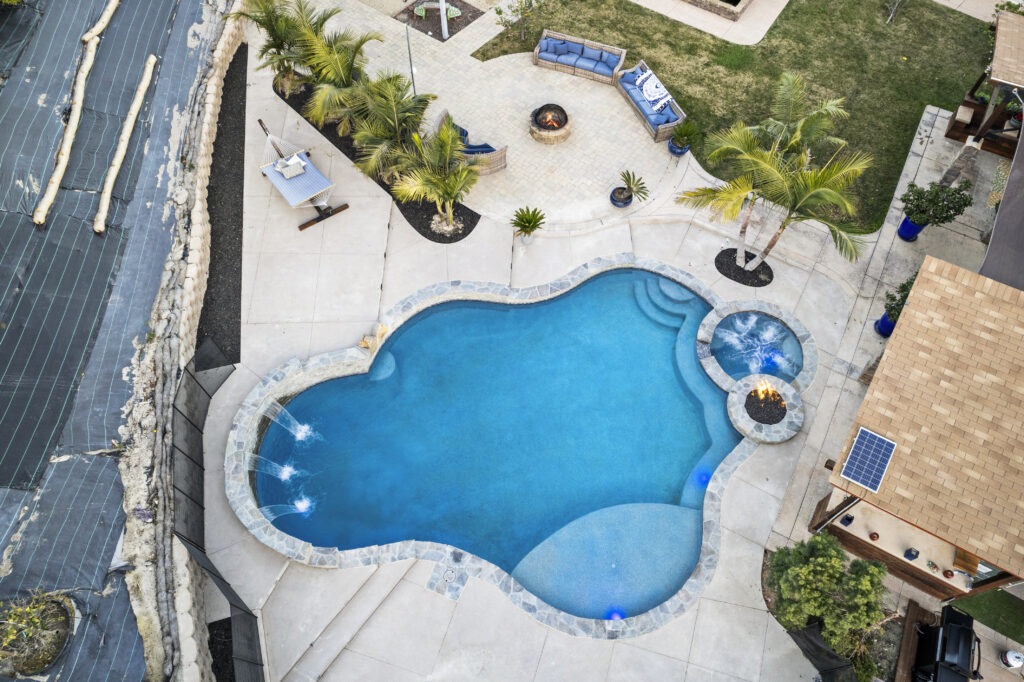
Up to now, most of your pool choices have been about structure: the shell, the plumbing, the equipment you never see. Tile and coping are different. This is the edge that frames the whole pool, and it’s the first place real color and personality show up. Coping caps the top border where the pool meets your deck.
Waterline tile runs along the inside edge, right at the water’s surface. And if you’ve got a spa, tile usually wraps its spillway too; small surfaces, big impact. Here’s what each one does, where it goes, and how to choose so your pool’s edge looks intentional instead of like an afterthought.
Key Takeaways
- Coping caps the edge. It’s the top border where the pool meets the deck, and the part you’ll grab, sit on, and walk past every day.
- Waterline tile runs at the surface. A band of glazed tile handles the grime line and lays down a stripe of color around the whole pool.
- It’s your first real color. Tile is usually the first choice that gives the pool personality, so it sets the palette for the backyard.
- The spa gets tile too. On a raised spa, tile lines the spillway where water returns to the pool.
- Choose them as a set. Coordinate tile and coping with your deck, finish, and house so the edge feels like one intentional look.
What Coping Actually Does
Coping is the cap that runs around the top edge of your pool, right where the shell meets the deck. It’s more than trim. It gives you a finished, comfortable edge to grab when you’re climbing out, a lip that keeps deck water and debris from washing straight into the pool, and a clean transition between two very different materials: the wet pool and the dry deck. It also takes a beating from wet feet, sunscreen, and pool chemicals, so it needs to be tough and, ideally, cool and grippy underfoot. The usual choices are cast concrete for value, natural stone like travertine or bluestone for a premium look, and porcelain or brick for something in between.
Quick tip: Hold a sample of any coping you’re considering and set it in the sun for a few minutes. You want an edge that stays cool enough for bare feet and hands in full afternoon heat.
Waterline Tile: The Stripe You’ll Always See
Run your eye around any pool, and there’s usually a crisp band of tile right at the water’s surface. That’s the waterline tile, and it works double duty. Practically, it sits exactly where oils, sunscreen, and minerals leave a grime line, and glazed tile wipes clean where a plaster finish would stain and wear. Visually, it’s a ribbon of color that outlines the entire pool and ties the water to the edge. A glassy blue-green reads tropical, a crisp white or grey reads modern, and a hand-glazed pattern adds real personality. It’s a small surface doing a lot of work.
Your First Real Piece of Color
Here’s the part that surprises people. Almost everything you’ve picked so far has been shades of blue water and neutral concrete. Tile is the first choice that’s genuinely about color and style. That waterline band, plus any tile on steps, benches, or a raised wall, sets the palette for the whole backyard. And because it’s a small surface next to the deck or the shell, it’s the place you can be a little bolder without blowing the budget. A glass tile accent goes a long way. Just pick it alongside your coping and interior finish, not in isolation, so all three read as one look.
Don’t Forget the Spa Spillway
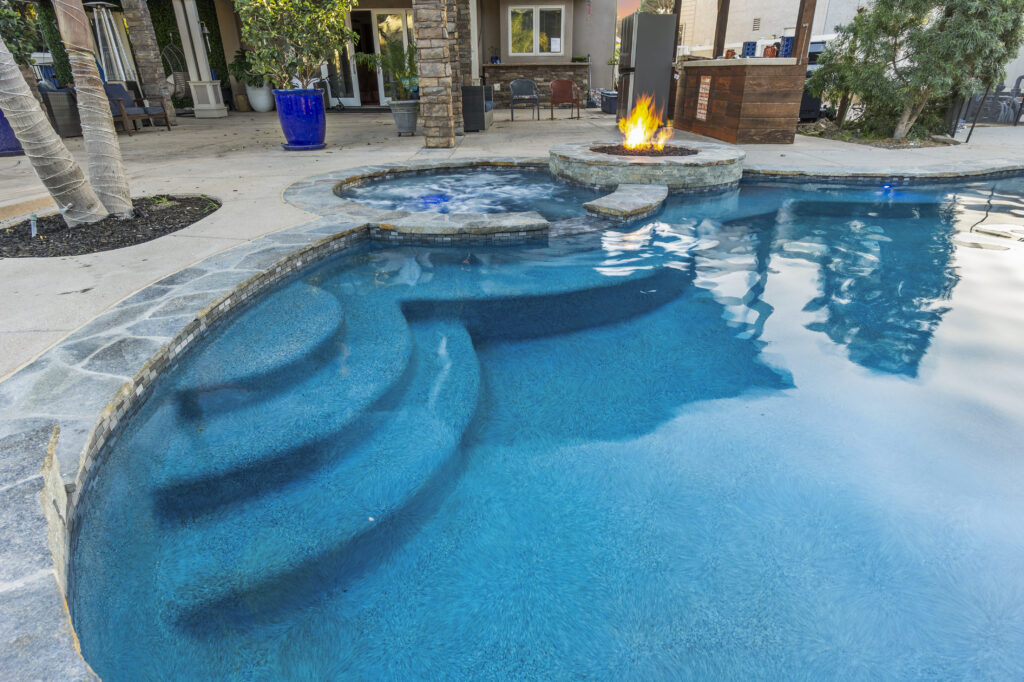
If your build includes a raised spa, tile has one more job. The spillway, the edge where spa water pours back down into the pool, is almost always tiled, both because it’s constantly wet and because it’s a focal point people naturally watch. Carrying your waterline tile, or a coordinating accent, across the spillway ties the spa into the pool instead of letting it look bolted on. It’s a small detail that makes a custom build actually feel custom. Personally, this is my favorite part of the pool, the way the water goes over is slightly romantic and beautiful at the same time.
Where Else Tile Shows Up
Tile isn’t limited to the waterline and the spa. Once you’ve settled on a look, it can turn up anywhere you want a pop of color or a durable, wipe-clean surface:
- Steps and benches: a tile band marks the edge for safety and adds a little contrast.
- Raised walls and water features: tile faces the vertical surfaces behind sheer descents and scuppers.
- Sun shelves and spa interiors: full-tile surfaces for a jewel-like, resort finish.
- Accents and mosaics: a floor medallion or a patterned border for extra personality.
The rule of thumb: the more tile, the higher the cost and the more premium the look. So decide where it earns its keep, then spend there.
How to Choose Tile and Coping Together
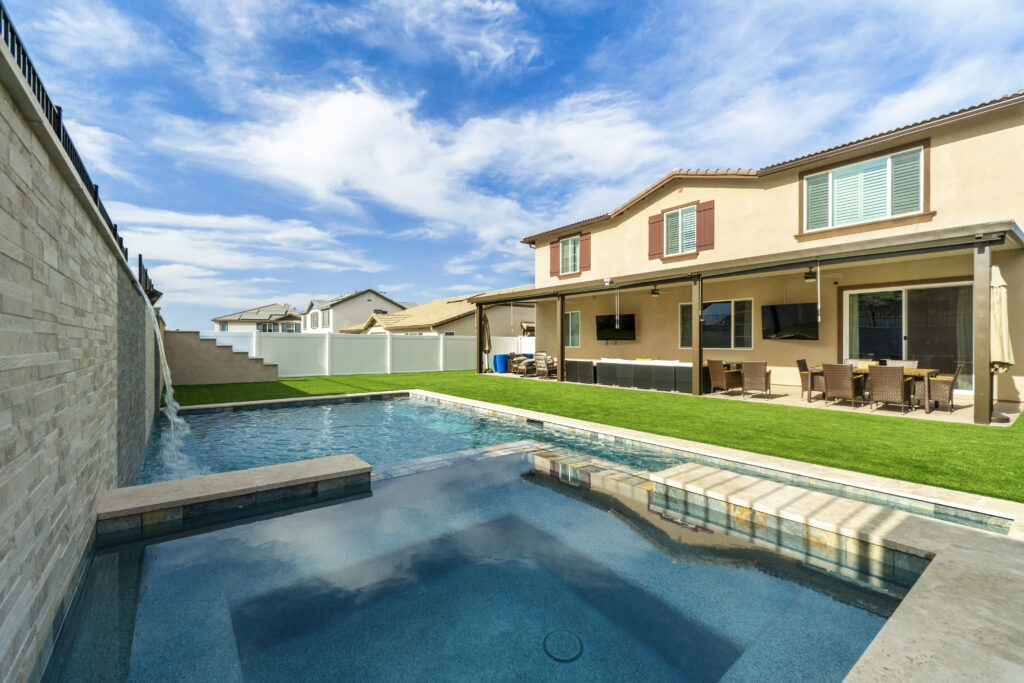
The trick is to treat tile and coping as a pair, chosen with your deck and interior finish in the room. Start with the mood you’re after, modern and crisp or warm and natural, and that narrows both at once. Coordinate rather than match exactly: coping that contrasts the deck slightly helps frame the pool, while tile that picks up a tone from your house or landscaping pulls the whole scene together. Keep the practical side in mind too: slip resistance and heat for the coping, a wipe-clean glazed surface for the waterline. And always look at samples outside, in your own yard and in daylight, because showroom lighting will lie to you every time.
Frequently Asked Questions
Coping is the cap that runs around the top edge of your pool, where the shell meets the deck. It gives you a finished, comfortable edge to hold and sit on, keeps deck runoff out of the water, and creates a clean transition between the pool and the deck.
It’s the band of tile installed right at the water’s surface, around the inside edge of the pool. It sits where oils and minerals leave a grime line, so it wipes clean, and it adds a ribbon of color that outlines the whole pool.
Coping is the horizontal cap on the top edge that you walk on and grab. Waterline tile is the vertical band at the water’s surface just below it. They sit right next to each other and are usually chosen together so the edge looks cohesive.
On a concrete pool, waterline tile is standard because it handles the grime line and finishes the edge cleanly. Fiberglass and vinyl pools deal with that line differently, but many owners still add tile accents for the color and detail.
There’s no single best; it’s a budget-and-style call. Cast concrete is the value pick, natural stone like travertine is the premium look, and porcelain or brick sit in between. Whatever you choose, make sure it stays cool and grippy underfoot.
No, if you are on a budget, you can have concrete coping or no coping at all.
The Bottom Line
Tile and coping are where your pool stops being a construction project and starts looking like yours. Coping frames the edge and gives you a comfortable, hard-wearing border. Waterline tile handles the grime line and lays down your first real stripe of color. And a tiled spa spillway ties the whole thing together. Choose them as a set, with your deck and finish in mind, and the edge of your pool will look designed, not just finished.