
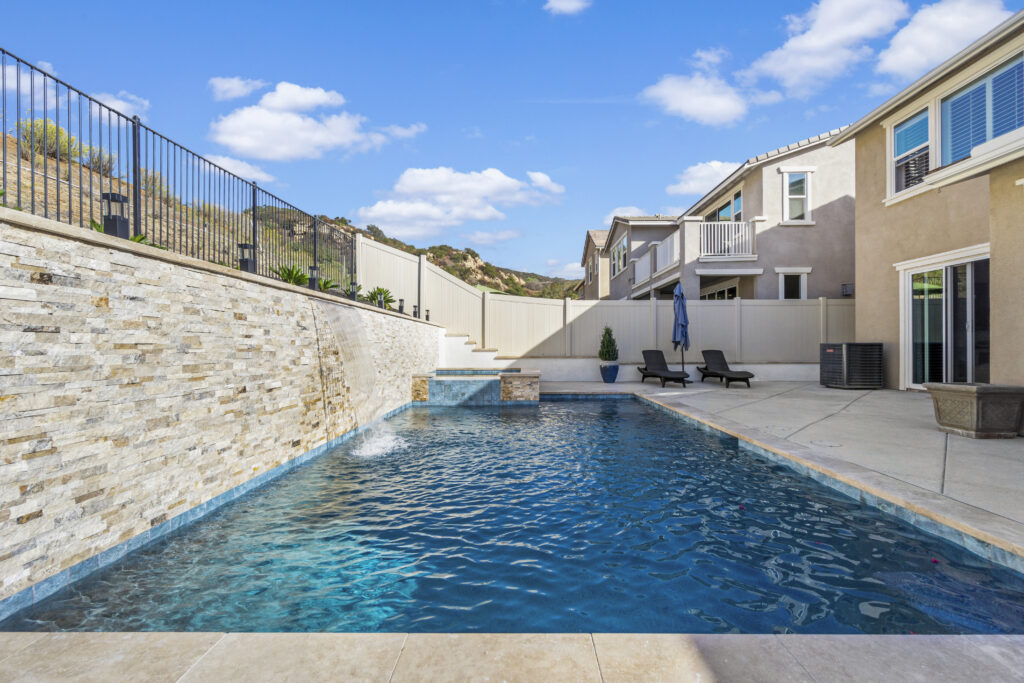
Your pool is the centerpiece, but the space around it is what you actually live in. Decking and hardscape cover everything outside the water: the surface you walk on, the areas where you lounge and grill, and the grass, stone, or rock that fills in the rest. Get it right and the whole yard reads as one designed space. Get it wrong, and a beautiful pool ends up marooned on a plain slab. The good news is you have a wide menu and an equally wide price range, from budget-friendly concrete to premium tile.
Here’s what goes into the space around your pool, what each material costs and asks of you, and how to mix them so it all looks intentional. One thing to know up front: your pool builder handles the deck, and often nearby hardscapes like patios, curbs, and steps. The rest – your grass, artificial turf, rock, planting beds, and irrigation lines – is usually handled by a separate landscaping company, and that work is typically unrelated to your pool contract.
Key Takeaways
- Hardscape is everything around the water. The deck, patios, paths, borders, and the grass or rock that fills the rest of the yard.
- Concrete is the budget baseline. The cheapest way to cover ground, and a clean-looking one at that.
- Materials step up from there. Pavers, natural stone, and especially tile add cost as you go.
- Softscape balances the hard stuff. Artificial grass, planting beds, and decorative rock break up all that paving.
- Mix on purpose. A few coordinated materials read as designed; too many read as busy.
- Two different companies. Your pool builder does the deck and nearby hardscape. Landscaping and irrigation are typically handled by a separate contractor.
What Counts as Decking and Hardscape
Hardscape is the catch-all for the built, non-living surfaces around your pool: the deck itself, plus any patios, walkways, seating areas, borders, and low walls. Softscape is the living stuff that fills the gaps: the lawn, planting beds, and trees. A good poolscape uses both. The hardscape gives you clean, all-weather surfaces to walk, lounge, and entertain on, and the softscape keeps the whole thing from feeling like a parking lot. This article is mostly about the hard surfaces, since that’s where the biggest material and budget decisions live.
It’s worth knowing who builds what, because it surprises a lot of first-time owners. Your pool builder pours and finishes the deck, and many will take on the hardscape right around it: patios, curbs, steps, and low walls, as additional work. But the softscape – your lawn, artificial grass, decorative rock, planting beds, and the water lines that feed them – is almost always a separate landscaping contractor on a separate contract. Plan for two teams, and make sure they talk to each other about grading and drainage before anyone starts.
Concrete: The Budget Baseline
If cost is your first concern, concrete is the answer. Poured as one continuous surface, it’s the cheapest way to cover a lot of ground, and it doesn’t have to look cheap. A broom finish is the plain, affordable version, while stamped and stained concrete can mimic stone, brick, or tile for a fraction of the price. The catch is that a large slab can crack over time, and repairs tend to show. Even so, for value and a clean, modern look, concrete is hard to beat, and it’s where a lot of budgets should start.
Stepping Up: Pavers, Stone, and Tile
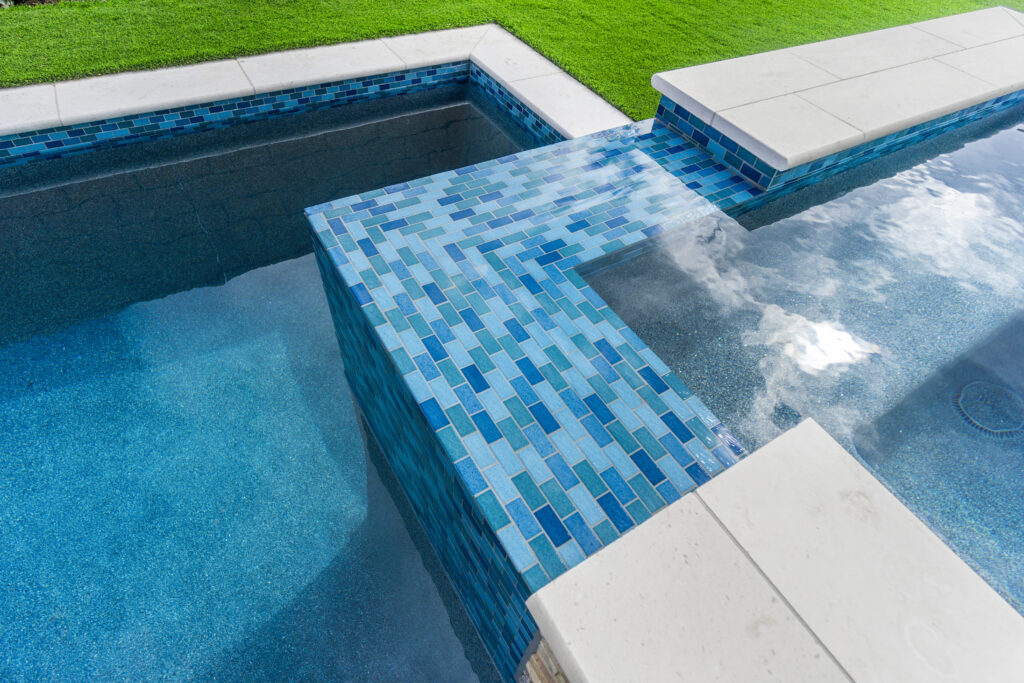
When you want more character, three upgrades wait, and each adds cost. Pavers are individual units of concrete or brick set by hand, giving you cleaner lines, more colors, and easy spot repairs, at a higher labor cost than a poured slab. Natural stone like travertine, flagstone, or bluestone brings the premium, organic look, and travertine in particular stays cooler underfoot, though you pay for both the material and the skilled install. Tile is the most premium and customizable of all, and the most expensive by a wide margin, which is why most people use it as an accent rather than a whole deck.
Quick tip: Whatever surface you’re considering, walk on a sample in the sun and pour some water on it. You want something that stays cool enough for bare feet and grippy enough when it’s wet.
Softscape: Grass, Rock, and Green
Not everything around a pool should be paved. The softer elements do a lot of work, for both looks and budget:
- Artificial grass: a lush green look with no mowing, no mud, and nothing tracked into the pool. It drains well and stays tidy year-round.
- Real lawn: classic and cheap to install, though it needs water, mowing, and a little distance from the water to keep clippings out.
- Decorative rock and gravel: an inexpensive, low-maintenance way to fill space, frame beds, and help with drainage, with a clean modern look.
- Planting beds: greenery and color that soften the hardscape and tie the pool into the rest of the yard.
One caveat worth repeating: softscape is the part your pool builder usually doesn’t touch. Line up a landscaping contractor early and budget for that work separately.
How to Put It Together Without Looking Busy
The secret to a poolscape that looks designed instead of thrown together is restraint. Pick a small palette, usually two or three materials, and let them repeat. A common, budget-smart formula is a concrete or paver deck right around the water, artificial grass or planting beds beyond it, and a band of decorative rock or a stone accent to tie in the house. Coordinate the colors with your coping, tile, and home so the whole scene agrees with itself. And plan the practical stuff early: drainage that moves water away from the pool, slip resistance where feet are wet, and enough clear deck for chairs and walking room. If you’re still hunting for a direction, Pinterest, Instagram, and TikTok are genuinely useful. Search your material by name, save every image that stops your scroll, then look for what they share. That saved collection is the fastest way to show a designer or landscaper the look you’re after, without trying to describe it.
Where to Spend and Where to Save
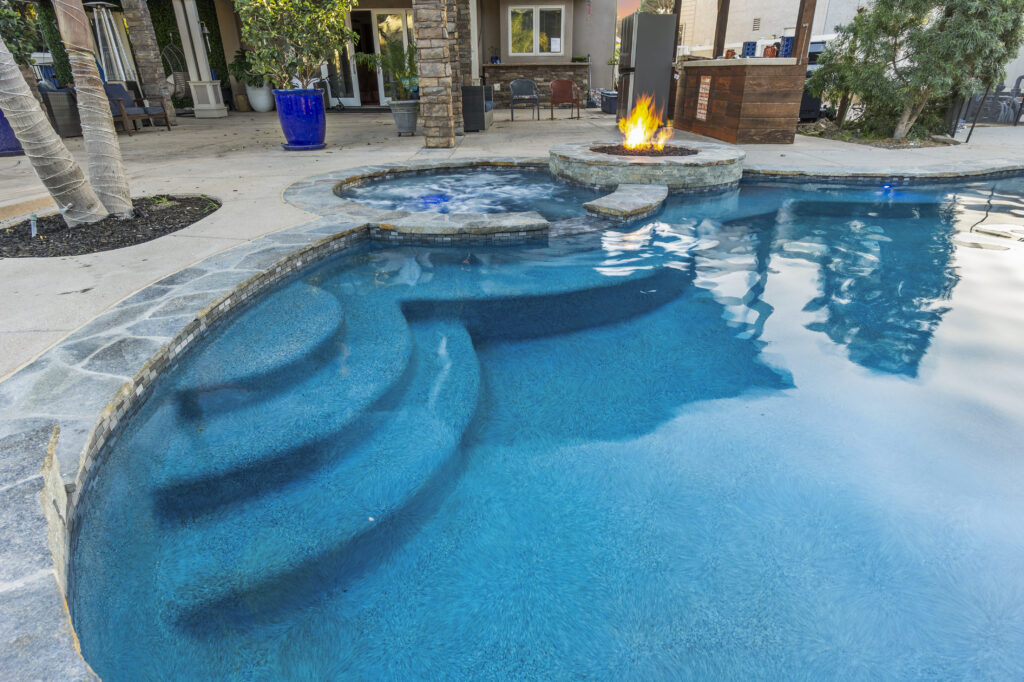
You don’t have to pick one material for the whole yard, and the smartest budgets don’t. Put the nicer surface where you’ll actually stand and lounge, right around the water, then use concrete, rock, and grass to cover the larger, less-trafficked areas. Tile makes a gorgeous accent on a step or a low wall without the cost of tiling an entire deck. That mix-and-match approach is how you get a high-end look without paying a high-end price for every square foot.
Frequently Asked Questions
Hardscape is all the built, non-living surfaces around your pool: the deck, patios, walkways, seating areas, borders, and low walls. The living parts, lawn, planting beds, and trees, are called softscape. A good poolscape uses both.
Usually not all of it. Your pool builder handles the deck and will often take on nearby hardscapes like patios, curbs, and steps as additional work. Grass, artificial turf, rock, planting beds, and irrigation lines are typically a separate landscaping company on a separate contract, unrelated to your pool build.
Poured concrete. Because it goes down as one continuous surface with the least labor, it’s the most affordable way to cover ground around a pool. A stamped or stained finish dresses it up for a bit more.
Yes, it’s a popular choice. It gives you a lush green look with no mowing or mud, drains well, and keeps grass clippings out of the water. It costs more up front than seeding a lawn, but it saves on upkeep.
Light-colored, reflective surfaces stay coolest, and natural travertine is known for staying comfortable underfoot in full sun. Dark concrete and dark stone can get too hot for bare feet.
Keep the palette small, usually two or three coordinated materials that repeat, and match the colors to your coping, tile, and house. Spend on the surfaces you touch most, use budget materials elsewhere, and plan drainage and clear walking space early. For inspiration, save ideas from Pinterest, Instagram, and TikTok, then bring that collection to your designer and landscaper.
The Bottom Line
The space around your pool is where you’ll actually spend your time, so it deserves as much thought as the water itself. Concrete keeps it affordable, pavers and stone add character, tile brings the wow, and grass and rock fill in the rest. Choose a small, coordinated palette, spend where your feet and eyes land most, and plan the practical stuff early. Do that, and your pool won’t just sit in your yard. It’ll anchor a backyard you never want to leave.